Title: AMD's Talent Raid: A Symptom, Not a Solution
AMD's recent poaching of Intel's data center AI executive, Saurabh Kulkarni, is generating buzz. But let's be clear: this isn't some masterstroke guaranteeing immediate market dominance. It's a symptom of Intel's deeper struggles and a calculated gamble by AMD, one that may or may not pay off. The market seems to think it will, given AMD's stock price has been steadily climbing, but let's look at the numbers.
The Revolving Door at Intel
The narrative is simple: AMD is winning the AI race, and executives are jumping ship. The reality is messier. Kulkarni's departure follows others, including Ronak Singhal and Rob Bruckner. Intel CEO Lip-Bu Tan is bringing in outsiders, like Jean-Didier Allegrucci (ex-Apple chip designer) and Shailendra Desai. Tan's focus on becoming an "engineering-focused company" is admirable, but it also suggests a prior deficiency. (Was Intel not engineering-focused before?)
Intel's Gaudi chips, intended to challenge Nvidia in the AI accelerator market, reportedly failed to meet their (modest) $500 million revenue target last year. That's not a rounding error; that's a significant underperformance. Kulkarni, as VP of data center AI product management, would have been partly responsible. Is he being scapegoated, or is he genuinely seeking greener pastures? The data doesn't tell us, and Intel's carefully worded statement ("We thank Saurabh for his contributions and wish him well") offers no clues.
What is clear is that AMD, under Lisa Su, has successfully positioned itself as a viable Nvidia alternative, even landing OpenAI as a customer. Su confidently projects "tens of billions" in annual revenue from the Instinct GPU business by 2027. That's a bold claim – but the market seems to believe her. The recent surge in AMD stock price reflects that optimism.
China's Shifting Sands
Meanwhile, the geopolitical landscape adds another layer of complexity. China is increasingly pushing for domestic AI chip self-sufficiency, potentially shutting out Nvidia, AMD, and Intel from a massive market. A recent directive requires state-funded data center projects to exclusively use domestically manufactured AI chips. This isn't just about trade tensions; it's about national security and technological independence.
The impact on Nvidia could be significant. CEO Jensen Huang has repeatedly urged Washington to ease export restrictions, arguing that limited access to US-made chips helps preserve America’s influence. He might be right, but Beijing seems to have made up its mind. China's actions are bad news for all these American companies.
I've looked at hundreds of these trade reports, and this particular shift in China is a big deal. China makes it clear; we do not want Nvidia, Intel, AMD; and Donald Trump cannot help
It remains unclear whether the directive applies nationwide or only to certain provinces, but the potential implications are vast. AI data center projects in China have attracted over $100 billion in state funding since 2021. If most of those projects are affected, AMD's potential growth could be seriously hampered.
The Talent Acquisition Game
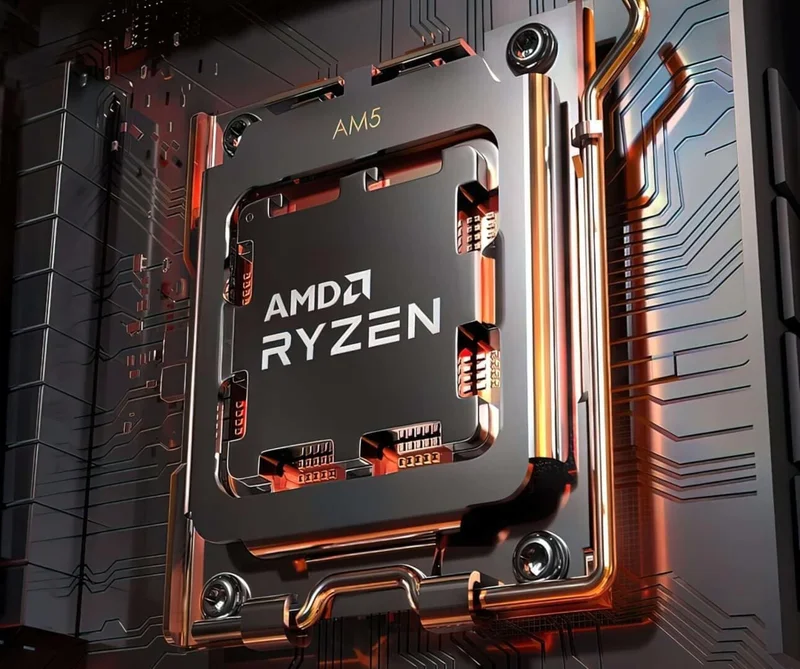
The move to hire Kulkarni is happening as AMD races ahead of Intel in its challenge to AI infrastructure giant Nvidia with a data center strategy that has allowed it to land OpenAI as a major customer and receive growing interest from other marquee tech companies. This has given AMD CEO Lisa Su the confidence to say on Tuesday that the company is “on track” to generate tens of billions in annual revenue in 2027 from its Instinct GPU business.
Kulkarni's LinkedIn profile paints a picture of a seasoned executive with experience at Microsoft, Graphcore, and Lucata before joining Intel. He led "cross-functional product management across systems, software and silicon design" and drove Intel's "silicon photonics strategy for GPU interconnect." That's a valuable skillset, but its impact depends on how effectively AMD integrates him into their existing structure. (Will he be given real autonomy, or will he be another cog in the machine?)
Is AMD Overplaying Its Hand?
Ultimately, Kulkarni's move is a talent acquisition – a relatively small piece in a much larger puzzle. AMD still faces significant challenges, including competition from Nvidia, geopolitical uncertainties, and the ever-present risk of technological disruption. The current narrative paints AMD as the clear victor, but the numbers suggest a more nuanced reality. While AMD's stock price has seen gains, it's essential to consider the broader market context and potential future headwinds. It's not a guarantee of success.
A Glimpse of Tomorrow
A Glimpse of Tomorrow
The move to hire Kulkarni is a chess move, not a checkmate. AMD is making smart plays, but the game is far from over.